
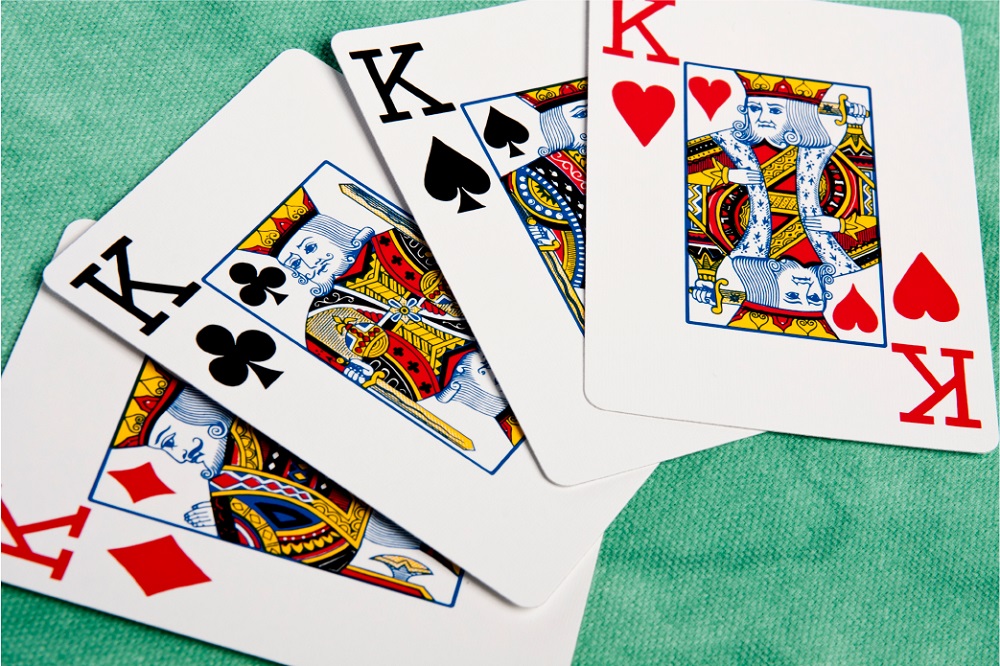
Card games may look like simple entertainment, but beneath the shuffle lies a deep mathematical structure. Probability plays a central role in shaping decisions, strategies, and outcomes in almost every card game, from casual family games to professional tournaments. Understanding probability doesn’t eliminate luck, but it dramatically improves decision-making and long-term success.
Understanding Probability in Card Games
Probability refers to the likelihood of a specific event occurring. In card games, this could mean the chance of drawing a particular card, completing a hand, or an opponent holding a stronger combination.
Key ideas include:
-
Favorable outcomes – results that benefit the player
-
Total possible outcomes – all results that could occur
-
Probability formula – favorable outcomes ÷ total outcomes
In a standard 52-card deck, every calculation begins with known quantities, which makes card games an ideal environment for applying probability theory.
Why Probability Matters More Than Luck
While luck determines short-term results, probability governs long-term performance. Skilled players rely on mathematical expectations rather than intuition or emotion.
Benefits of probability-based play include:
-
Making informed decisions under uncertainty
-
Reducing costly mistakes
-
Identifying when risk is justified
-
Maximizing expected value over time
Players who ignore probability may occasionally win, but those who understand it win consistently.
Probability and Decision-Making
Every decision in a card game involves weighing odds against potential rewards.
Examples of probability-driven decisions:
-
Whether to draw another card or stand
-
When to bet, raise, or fold
-
How aggressively to play a marginal hand
-
When defensive play is mathematically safer
Instead of asking “What do I feel like doing?”, experienced players ask “What is the most probable profitable move?”
Role of Probability in Popular Card Games
Different card games apply probability in unique ways, but the core principle remains the same: optimize decisions based on known odds.
Poker
Poker heavily depends on probability and incomplete information.
-
Calculating hand odds
-
Estimating outs
-
Comparing pot odds with winning chances
-
Anticipating opponent ranges
Successful poker players continuously update probabilities as new cards appear.
Blackjack
Blackjack uses probability to minimize the house edge.
-
Evaluating the chance of busting
-
Knowing when to hit, stand, double down, or split
-
Understanding card distribution changes during play
Even small probability advantages can significantly improve long-term outcomes.
Rummy and Other Draw Games
In draw-based games:
-
Players calculate the likelihood of completing sequences or sets
-
Decisions depend on remaining unseen cards
-
Discard choices are influenced by opponent probabilities
Here, probability combines with memory and observation skills.
Expected Value and Risk Management
One of the most important concepts in probability is expected value (EV).
Expected value helps players:
-
Measure the average outcome of a decision over time
-
Compare different choices objectively
-
Avoid emotionally driven plays
A move with a positive expected value may lose occasionally, but over repeated play, it yields profit or advantage.
Probability vs. Psychology
Probability alone is powerful, but card games are played by humans, not calculators.
Effective players balance:
-
Mathematical probability
-
Opponent behavior
-
Psychological tendencies
-
Table dynamics
This balance allows players to exploit mistakes made by others who misunderstand or ignore probability.
Learning Probability for Better Gameplay
Developing probability skills doesn’t require advanced mathematics.
Practical steps include:
-
Learning basic odds and percentages
-
Studying common card distributions
-
Reviewing past hands analytically
-
Practicing disciplined decision-making
Over time, probability awareness becomes instinctive rather than mechanical.
Limitations of Probability
Probability improves decision quality, but it does not guarantee outcomes.
Important limitations:
-
Random variation still exists
-
Short sessions can defy odds
-
Emotional control is still necessary
Probability ensures better decisions, not guaranteed wins.
Conclusion
The role of probability in card games is foundational. It transforms guessing into strategy and luck into calculated risk. Players who understand probability gain a long-term edge, make smarter decisions, and approach games with confidence rather than hope. While chance can never be removed, probability ensures that success is no longer accidental.
Frequently Asked Questions (FAQ)
1. Is probability useful for casual card players?
Yes. Even basic probability knowledge improves decision-making and reduces common mistakes.
2. Do professional players rely only on probability?
No. They combine probability with psychology, observation, and experience.
3. Can probability eliminate luck in card games?
No. It reduces uncertainty but cannot remove randomness entirely.
4. Is learning probability difficult?
Basic probability concepts are simple and can be learned with practice and repetition.
5. Does probability apply to all card games?
Yes. Any game involving shuffled cards and uncertainty involves probability.
6. How long does it take to see results from probability-based play?
Results vary, but improvements in decision quality are immediate, while consistent wins appear over time.
7. Can probability help control emotional decisions?
Yes. Probability provides objective reasoning, reducing impulsive and emotionally driven choices.
