
14
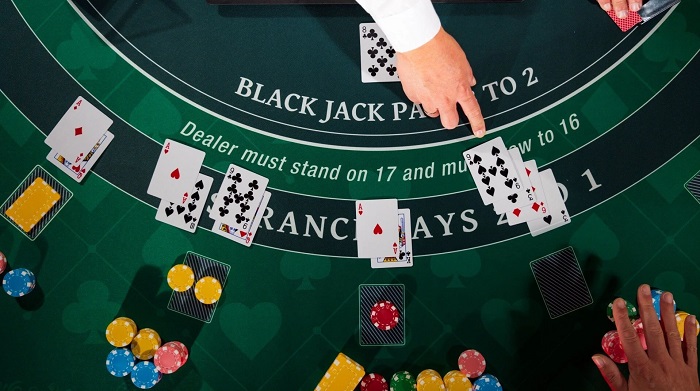
Blackjack enjoys a unique reputation on the casino floor: it is one of the few table games where player decisions directly dictate the house edge. Unlike roulette or slot machines, where outcomes rely entirely on blind luck, blackjack is governed by fixed mathematics. Yet, this sense of agency often creates a false sense of security. Casual players frequently confuse intuition with strategy, relying on hunches, defensive instincts, or superstition.
Over time, even seemingly minor tactical deviations compound into substantial financial leaks. Reducing the casino’s advantage to under one percent requires knowing not just what moves to make, but understanding why common instincts often betray players in critical spots. Recognizing the most frequent pitfalls is the fastest way to turn erratic table sessions into disciplined, mathematically sound play.
Treating Basic Strategy as Optional Advice
The single most damaging mistake a player can make is treating basic strategy as a loose set of suggestions rather than a definitive mathematical blueprint. Basic strategy was not invented by casino operators to trap tourists; it was calculated through millions of computer-simulated hands to identify the single move—hit, stand, double down, split, or surrender—that yields the highest expected value for every possible player total against every possible dealer upcard.
When players deviate based on a gut feeling or because they fear busting on a high card, they immediately forfeit the mathematical advantage the rules afford them. Standing on a hard 16 against a dealer’s 7 because you are afraid of busting feels safe, but mathematics proves it is a losing proposition over the long run. The dealer’s likelihood of finishing with 17 through 21 is too high to justify surrendering the chance to improve your hand. Trusting the math over self-preservation instincts is the foundational hurdle every serious player must clear.
Misplaying Soft Totals and Doubling Opportunities
Soft hands—hands containing an Ace counted as eleven—generate more confusion and unforced errors than almost any other scenario at the table. Because an Ace cannot bust on the next hit, soft totals carry immense offensive potential that conservative players routinely squander.
Standing on Soft 17 and Soft 18
One of the most persistent rookie blunders is standing on a soft 17 (Ace-6). Many players see seventeen and believe they have reached an acceptable total. In reality, seventeen is a weak holding that wins only when the dealer busts. Since you cannot bust by drawing a single card to a soft 17, standing voluntarily locks in a mediocre result. Depending on the dealer’s upcard, basic strategy dictates either hitting to improve or doubling down to capitalize on the dealer’s vulnerability.
Soft 18 (Ace-7) is another frequent casualty of passive play. Standing on soft 18 against a dealer’s 9, 10, or Ace is a common defensive reaction born from fear of ruining an eighteen. However, the dealer’s likelihood of making a nineteen or twenty against those strong upcards makes standing an underdog move. In those specific spots, hitting the soft 18 gives you the best statistical shot at a competitive finish.
Hesitating on Aggressive Double Downs
Doubling down is how players generate positive equity in blackjack. When the dealer shows a weak upcard, such as a 5 or 6, players often freeze if their own total feels precarious, such as a soft 13 through soft 18. Doubling in these spots is not about guaranteeing a twenty; it is about maximizing the money on the table when the dealer is at their most statistically vulnerable. Skipping doubles out of caution acts as an invisible tax on your bankroll.
Committing Costly Splitting Errors
Pair splitting offers another valuable offensive weapon, yet players frequently split the wrong pairs and keep together the ones that demand separation.
Splitting Tens Out of Greed
Holding a pair of tens gives you a twenty—the second-best hand in blackjack. Yet, some players cannot resist the urge to turn one strong hand into two potential twenty-ones by splitting them against a dealer’s weak upcard. This is a classic greed trap. A twenty wins an overwhelming majority of the time. Breaking up a near-certain winner to chase two speculative hands increases your exposure to variance without offering a proportional reward. Never split tens.
Refusing to Split Eights and Aces
Conversely, fear often prevents players from splitting eights against a dealer’s 9, 10, or Ace. A pair of eights totals sixteen, arguably the worst starting position in the game. Hitting a sixteen frequently busts, while standing guarantees a loss if the dealer reaches seventeen. Splitting eights breaks apart an awful hand into two separate hands starting with an eight, each offering a legitimate chance to draw to an eighteen. While both hands may not win every time, the net loss from splitting is far lower than the guaranteed bleeding of playing a hard sixteen.
Similarly, always split Aces, regardless of what the dealer is showing. Starting two independent hands with eleven offers unparalleled offensive upside that far outweighs holding a soft twelve.
Buying Insurance and Chasing Side Bets
When the dealer shows an Ace, the table will be asked whether anyone wants insurance. Casino personnel often frame this as protecting your good hand against a dealer blackjack. In reality, insurance is one of the most profitable traps on the casino floor.
Insurance is simply an independent side bet that the dealer’s hole card is worth ten. It pays 2:1, but the actual odds against that hole card being a ten are roughly 9 to 4 in a standard shoe. Unless you are an advanced card counter tracking the exact ratio of remaining face cards, buying insurance carries a substantial house edge of over seven percent.
The same logic applies to popular side bets like Perfect Pairs or 21+3. While their multi-tier payouts look appealing, their house edges regularly climb into the double digits. Sticking purely to the main hand is essential for long-term survival.
Overlooking Table Rules: The 6:5 Payout Danger
Not all blackjack tables are created equal, and failing to read the table felt before sitting down is a catastrophic administrative mistake.
Historically, a natural blackjack pays 3:2 on the original bet, meaning a $10 wager yields $15. In recent years, many casinos have quietly replaced this standard with a 6:5 payout, where a $10 wager pays only $12. While a $3 difference might sound inconsequential on a single hand, it balloons the house edge by roughly 1.4 percent. That single rule change nearly quadruples the casino’s mathematical advantage over a basic strategy player.
Players must also verify whether the dealer stands or hits on soft 17 (tables where the dealer stands on all 17s are consistently more favorable) and whether doubling after splitting is permitted. Scouting the table conditions takes thirty seconds and saves significant money over an evening.
Falling for Progressive Betting Traps
A common psychological trap is believing that betting patterns can overcome a negative expectation. Systems like the Martingale—doubling your bet after every loss to recoup past losses—create the illusion of guaranteed profit until an inevitable bad streak hits the table limit or exhausts your bankroll.
No betting progression alters the underlying odds of an individual hand. The only reliable money management strategy involves establishing a dedicated bankroll, sizing bets to withstand standard variance (typically risking no more than one to two percent of your total session bankroll per hand), and walking away when predetermined loss or win thresholds are reached.
Blackjack is ultimately an exercise in disciplined execution. The casino relies on emotional impulses, fear of busting, greed for high payouts, and table distractions to turn the odds decisively in its favor. By committing basic strategy to memory, avoiding sucker bets, insisting on player-friendly table rules, and removing emotional intuition from tactical decisions, you transform the game from an expensive gamble into a tightly controlled contest of probabilities.
